LABS 1: Fundamentals of HCIx
Video Recap
1.1
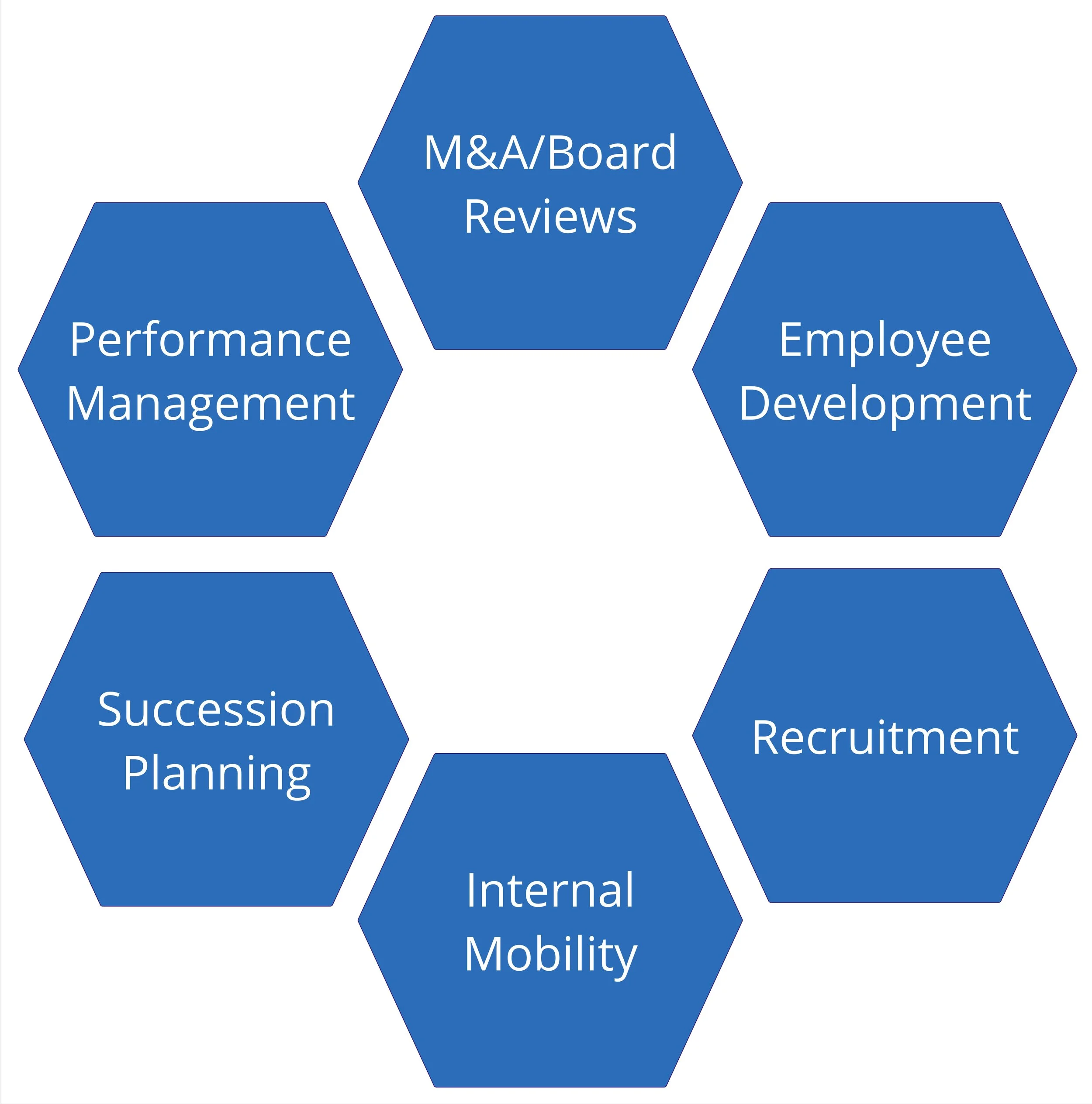
Capability Queries Honeycomb
Defining the six query honeycombs
Understanding how to structure and categorise open ended business questions into focused capability queries.
1.2
Understanding Capability Domains
Defining the eight capability domains
Communication
Critical Thinking
Problem Solving
Adaptability and Flexibility
Teamwork
Creativity
Leadership
Emotional Judgment
1.3
Understanding Capability Levels
Defining the four capability indexes
Emerging
Competent
Proficient
Expert
1.4
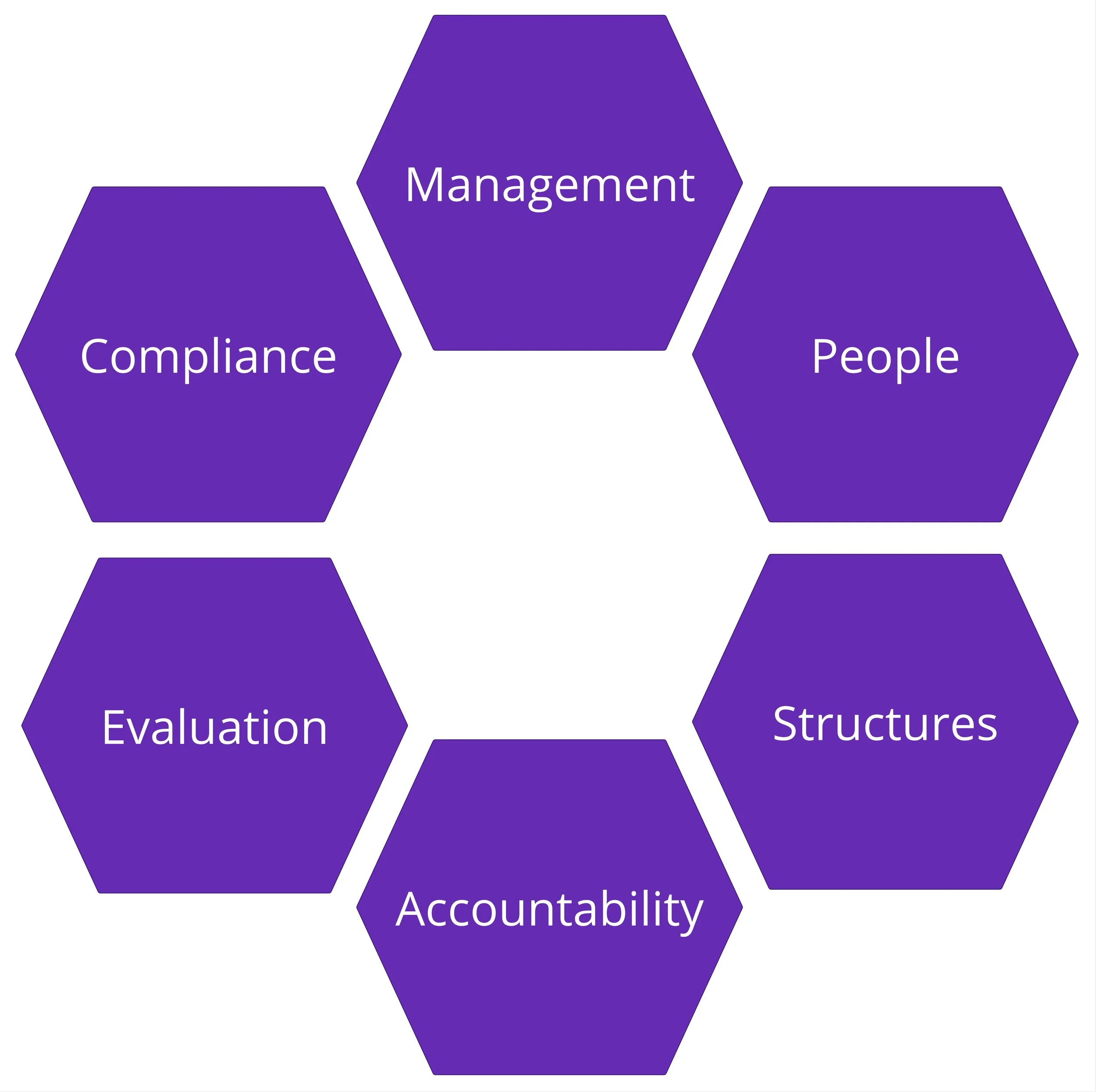
Understanding Lumen Categories
Defining the general categories
Management
People
Structures
Accountability
Evaluation
Compliance
Lesson 1.1 The Capability Query Honeycomb
Lesson 1.1 The Capability Query Framework (Video Recap)
Introduction
Welcome to Lesson 1.1: The Capability Query Honeycomb. Today we'll explore how organisations can transform business questions into Capability Queries using the Capability Query Honeycomb.
Understanding Capability Query Dimensions
The honeycomb represents six interconnected dimensions of workforce processes and practices:
Performance Management
Employee Development
Recruitment
Internal Mobility
Succession Planning
M&A + Board Reviews
Each dimension represents a critical workforce function where human capabilities directly impact organisational success.
From Business Questions to Capability Queries
Organisations regularly face complex questions about their people. For example:
Who should we promote to lead our new division?
Why is Team A outperforming Team B despite similar resources?
How can we improve our customer satisfaction scores?
The Capability Query Honeycomb helps us to structure and categorise these open ended business questions into focused capability queries.
Learning Objectives
Identify the key elements within the capability query honeycomb
Understand how open ended business questions can be turned into structured capability queries.
Creating Tangible Business Value
Structured capability queries unlock the power of Human Capability Indexing (HCIx), which enable:
Better decision-making, through understanding precisely which human capabilities drive success in specific roles, making your people decisions more evidence-based.
Targeted development, through specific capability gap analysis, enabling you to progress from generic training programmes to precise development of the capabilities that matter most for specific performance.
Risk reduction, through the identification and implementation of minimum capability index thresholds.
Optimised team building, through sophisticated analysis of how to match and complement capabilities so strengths are maximised.
Key Takeaways
The Capability Query Honeycomb helps to frame open ended business questions as clear capability queries.
Capability ensure that you are asking the right questions and collecting the right human capability data so to create tangible business value through effective data-led decisions and targeted actions.
Lesson 1.2: Capability Domains
Lesson 1.2: Capability Domains (Video Recap)
Introduction
Welcome to our fourth lesson on understanding the capability framework. Here we will focus on understanding the the eight core capability domains that provide the generic taxonomy for measuring and understanding human capability in organisational contexts.
Learning Objectives
By the end of this lesson, you will be able to:
Identify and describe the nine core capability domains
Understand how each capability domain contributes to organisational effectiveness
Apply capability domain concepts to real-world organisational scenarios
Part 1: Understanding the Generic Capability Taxonomy
The capability taxonomy provides a structured framework for understanding human capability across eight distinct but interconnected domains.
Each domain represents a distinct aspect of human capability that contributes to effectiveness in different organisational contexts.
Communication: The ability to effectively convey information, ideas, and emotions to others.
Critical Thinking: The capacity to analyse information, evaluate evidence, and form reasoned judgements.
Problem Solving: The capability to identify issues, analyse possible solutions, and implement effective actions.
Adaptability and Flexibility: The skill to adjust one's approach, behaviour, and thinking in response to changing situations.
Teamwork: The skill to work effectively and cooperatively with others to achieve shared objectives.
Creativity: The ability to generate novel ideas, approaches, and solutions.
Leadership: The ability to inspire, guide, and influence others towards achieving common goals.
Emotional Judgement: The capacity to recognise, understand, and manage one's emotions and those of others.
Part 2: Exploring Each Capability Domain
Let's examine each capability domain in greater detail:
Communication
The ability to effectively convey information, ideas, and emotions to others
Includes both verbal and non-verbal skills, active listening, and empathy
Depends on understanding context, audience, and purpose
Critical Thinking
The capacity to analyse information, evaluate evidence, and form reasoned judgements
Involves questioning assumptions, recognising biases, and applying logic
Requires a foundation of knowledge and the ability to recall relevant information
Problem Solving
The capability to identify issues, analyse possible solutions, and implement effective actions
Requires logical reasoning, creativity, and sometimes collaboration
Relies heavily on prior knowledge of similar situations and strategies
Adaptability and Flexibility
The skill to adjust one's approach, behaviour, and thinking in response to changing situations
Involves openness to new ideas, learning from experience, and resilience
Dependent on recognising the demands of the situation and adjusting accordingly
Teamwork
The skill to work effectively and cooperatively with others to achieve shared objectives
Requires communication, empathy, flexibility, and conflict resolution
Dependent on understanding the roles, strengths, and needs of team members
Creativity
The ability to generate novel ideas, approaches, and solutions
Combines imagination with practical knowledge and contextual awareness
Relies on recalling diverse experiences and information to inspire innovation
Leadership
The ability to inspire, guide, and influence others towards achieving common goals
Involves decision-making, empathy, accountability, and communication
Draws upon understanding of team dynamics, situational context, and relevant experience
Emotional Judgement
The capacity to recognise, understand, and manage one's emotions and those of others
Involves self-regulation, empathy, and sensitivity to context
Essential for managing interpersonal relationships and understanding social cues
Part 3: Capability Domains in Organisational Context
Understanding these eight capability domains allows organisations to:
Map the capability requirements for specific roles and functions
Identify development priorities for individuals and teams
Create targeted interventions that address specific capability needs
Build balanced teams with complementary capabilities
Match individuals to roles where their capability strengths create the most value
Example: A product development team might require high levels of creativity and problem solving, while a customer service team might prioritise communication and emotional judgement.
Key Takeaways
The eight capability domains provide a comprehensive generic taxonomy for understanding human capability
Each domain represents a distinct aspect of effectiveness that manifests differently across roles
Understanding capabilities at this granular level enables precise development and deployment of transformation or intervention strategies
Different organisational contexts require different capability emphases.
Lesson 1.3: Understanding Capability Levels
Lesson 1.3: Understanding Capability Levels (Video Recap)
Introduction
Welcome to our third lesson on understanding the capability framework. We will explore the four levels of capability proficiency that provide a structured way to understand development progression within each of the capability domains we examined in our previous lesson.
Learning Objectives
By the end of this lesson, you will be able to:
Identify and describe the four capability levels (Emerging, Competent, Proficient, and Expert)
Understand how capability levels manifest across different capability domains
Apply capability level frameworks to assess development needs in real-world contexts
Understanding Capability Levels
The capability framework identifies four distinct levels of proficiency that apply across all capability domains:
Emerging: The initial stage of capability development requiring guidance and supervision
Competent: The stage of independent functioning in routine situations
Proficient: The advanced stage of handling complex situations with minimal oversight
Expert: The highest stage of capability, setting standards and innovating in the field.
These levels represent a development continuum that helps organisations understand where individuals are in their capability journey and what development paths are available to them.
Exploring Each Capability Level
Let's examine each capability level in greater detail:
Emerging
Requires consistent guidance and supervision to complete context-specific tasks
Still developing foundational knowledge and capabilities
Operates by following established procedures with support
Decision-making is heavily scaffolded, relying on clear instructions and frequent check-ins
Makes mistakes as part of the learning process
Contributions characterised by curiosity and a willingness to ask questions
Competent
Works independently on routine assignments with satisfactory results
Has acquired essential context-based knowledge and capabilities
Understands basic principles and procedures well enough to make straightforward decisions reliably
Needs guidance when facing complex challenges
Has developed sufficient judgement to recognise own limitations and seek appropriate input
Decision-making takes into account different workplace contexts
Can explain basic concepts to others and contribute meaningfully to team discussions
Balances autonomy in standard situations with consultation for more nuanced problems
Proficient
Handles complex situations effectively with minimal oversight
Demonstrates deep understanding across most aspects of their role
Works efficiently within established frameworks while adapting approaches based on context
Makes sound decisions in typical situations with confidence
Decision-making incorporates robust understanding of organisational priorities and industry standards
Requires only occasional guidance when facing novel or particularly challenging circumstances
Has developed enough expertise to teach fundamentals to others
Serves as a reliable resource for team members
Continues to refine capabilities through increasingly sophisticated assignments
Expert
Sets standards of excellence in their field
Innovates solutions to the most challenging problems
Serves as a recognised authority whose judgement is sought by others
Decision-making transcends established frameworks
Draws on deep contextual understanding and pattern recognition
Creates new approaches that advance organisational capabilities
Demonstrates mastery that extends beyond standard practices
Shapes how work in their domain is conceptualised and executed
Influences through mentoring and teaching advanced concepts
Elevates team performance through direct contributions and knowledge transfer
Provides critical insights that help organisations adapt during uncertainty or transformation
Capability Levels in Organisational Context
Understanding capability levels provides organisations with several practical benefits:
Precise Development Planning: Targeting growth from one specific level to the next rather than generic skill development
Clear Progression Pathways: Creating transparent gap analysis and frameworks for advancement and capability growth
Effective Team Design: Building teams with complementary capability levels to balance expertise with fresh perspectives
Strategic Talent Deployment: Matching individuals to challenges appropriate to their capability level
Targeted Learning Experiences: Designing development activities specific to each capability level's needs.
Key Takeaways
The four capability levels provide a structured framework for understanding development progression
Each level represents a distinct stage in capability mastery with characteristic behaviours
Capability levels apply across all domains but manifest differently within each
Understanding capability levels enables more precise development planning and team design
Progression through capability levels typically requires both experience and deliberate development.
Lesson 1.4: Understanding Lumen Categories
Lesson 1.4: Understanding Lumen Categories (Video Recap)
Introduction
Welcome to our fourth lesson on understanding the capability framework. Today, we'll explore the six Lumen general categories that provide an organisational context for applying the capability domains we've examined in previous lessons. These categories help us understand how capabilities manifest in different organisational functions.
Learning Objectives
By the end of this lesson, you will be able to:
Identify and describe the six Lumen categories
Understand how capability domains manifest within each Lumen category
Apply the Lumen category framework to organisational scenarios
Understanding the Lumen Category Framework
The Lumen framework identifies six general categories that represent key areas of organisational functioning:
Management: How leadership and direction are provided across the organisation
People: The human capability elements that drive organisational performance
Structures: How the organisation is designed to enable effective operation
Accountability: The mechanisms for responsibility, ownership, and delivery
Evaluation: How performance and impact are measured and assessed
Compliance: The governance frameworks that ensure appropriate operation
Each category provides a context where the capability domains we've explored manifest in specific ways relevant to that organisational function.
Exploring Capability Domains Within Lumen Categories and how these relate to Organisational Context
Let's examine how capability domains manifest within each Lumen category. Notice how capabilities change per Lumen category. View here
Understanding how capabilities manifest across Lumen categories provides several practical benefits:
Role Design: Creating positions that require specific capability profiles appropriate to their primary category
Targeted Development: Designing capability development interventions specific to category contexts
Organisational Alignment: Ensuring capabilities are applied consistently within categories across the organisation
Strategic Planning: Identifying capability requirements for different organisational functions
Key Takeaways
The six Lumen categories provide organisational context for applying capability domains
Capabilities manifest differently across categories based on functional requirements
Understanding category-specific capability patterns enables more precise development and deployment
Effective organisations require strong capabilities across all six categories, but with different emphases
The integration of capabilities across categories supports organisational cohesion.